Mental health conversations only surface during a crisis; never proactive, never consistent
Employees don't know help exists
When employees struggle, they turn to informal networks or personal therapists, unaware that structured, professional support is already available to them
Confidentiality issues
Confidentiality issues remain a critical barrier preventing employees from seeking help
Leadership can't clearly see the ROI
Leadership senses the program isn't working, but lacks data-backed evidence to challenge it, improve it, or justify investment
Managers are left without a playbook
Managers want to support struggling team members but lack the tools, language, and frameworks to act confidently
Why Traditional EAP Models Fall Short
HR carries the awareness burden alone - No proactive engagement model. Every awareness push required HR bandwidth; hours spent monthly on a job that should have been the provider’s responsibility
Session caps cut support short - Rigid session limits force employees to disengage mid-recovery
One-size-fits-all - Offering standardized services with no flexibility, not tailored to the workforce demographics, industry pressures, or the distinct cultural fabric of the organization
Counsellor quality is not consistent - Network-based models meant every employee gets a different counsellor, with varying levels of quality, training, and empathy
Data without insight or action - Reports filled with numbers but no narrative; no trends, no recommendations, no understanding
We didn't just improve the model
We replaced it
With Holistic and Tailored Wellbeing Approach
The result is a wellbeing architecture
What Is the Secret Sauce?
1. Engagement that actually drives action
Employees are losing interest in webinars. Multi-format delivery, including physical presence in offices are showing higher participation rates. Floor walks work well as well as direct contact with employees in high traffic areas of office buildings
2. Counselling that people trust and talk about
The counselling experience must be of high-quality. Our full-time counsellors receive a 4.6 average session rating, thus creating organic word-of-mouth reputation across the organization
3. Always visible, not occasionally promoted
From virtual to on-ground presence, driving consistent awareness touchpoints every month, not just one-off campaigns. We don’t know when employees need us and we need to be there when they need us the most
4. Something for everyone
From early career employees to senior directors, EAP must have something for everyone. Even if some of them don’t need counselling, we should provide specialized programs and self-help tools that apply to employees at all levels in the organization
5. Innovation that keeps evolving
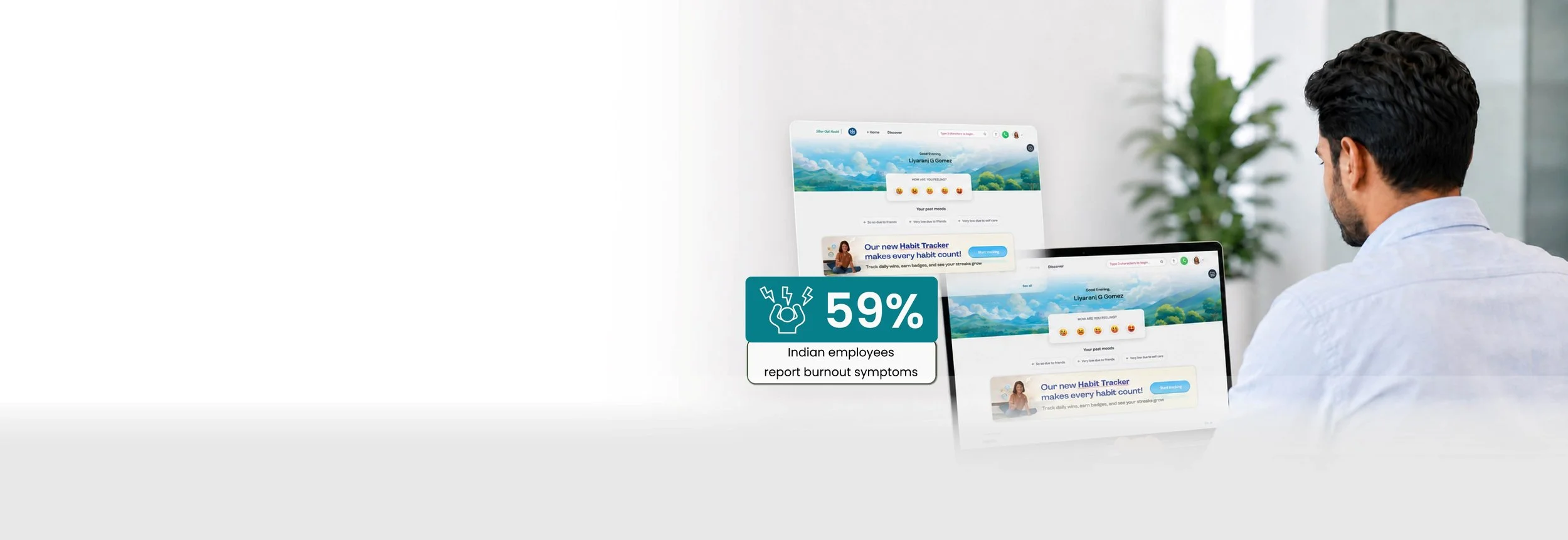
A gamified AI-powered App & Portal with push notifications, a hyper-personalized experience, psychological assessments, and real-time support models that improve engagement and drive higher repeat usage
6. From stress awareness to resilience building
Scientific programs like our Online Cognitive Behavioral Therapy (CBT) help employees learn coping skills to deal with their day-to-day stress challenges, with pre- and post-assessments to measure and monitor progress
What Sets a Smart EAP Apart…
Core mental health services delivered with clinical depth
Counselling (multilingual) should be unlimited for employees with validated psychological assessments and interventions, as well as identification of high-risk cases and crisis help designed to prevent self-harm and harm to others
Large number of in-house experienced counsellors Employees should receive counselling support as soon as they need it. There must be continuous monitoring to ensure enough counsellors are available for immediate booking
Dedicated In-House Technology & Compliance Team
EAP companies should ideally have their own IT development team to develop and manage various IT products that includes digital app and interventions as wells as tools are built for the HR managers
Customized engagement plans
Employee profiles and challenges vary by industry; for example, an e-commerce delivery team will be different from a research team at a Biotech firm. EAPs should be customized based on the type of industry and their needs
Dedicated Wellness Managers with relevant expertise
A single point of contact who helps drive usage, solve issues, and keep the program active and visible. They must be trained professionals who can drive wellness programs from outside and help HR managers build awareness and engagement
…And There’s More
In-house Research & Analytics team
A mere HR dashboard alone is not sufficient. Periodic insights reports should highlight trends and customized interventions to address challenges faced by employees
Year-round, unlimited awareness campaigns
EAP must have strong visual communication team to help companies run regular campaigns throughout the year, so employees stay aware and HR doesn’t have to manage it
Dedicated In-House Technology & Compliance Team
EAP companies should ideally have their own IT development team to develop and manage various IT products that includes digital app and interventions as wells as tools are built for the HR managers
A qualified counsellor, not a call handler
Employees will need to access a trained counsellor from the start. No call handlers, no delays, just immediate support by experts
AI-powered, personalized app & portal
EAPs should take full advantages of developments in AI to provide highly personalized experiences for employees. Gamified experience, with self-help resources, mood tracking and seamless appointment booking, available 24/7 for employees and family members
A Question Worth Asking
If employees aren't using your EAP… what's really the reason?
Is it the lack of awareness, inability to access or trust issues? OR Intent is there and everything is in place, but engagement is low?
Either way employees aren't getting the support they need.
It's not about having an EAP. It's about having one that truly works