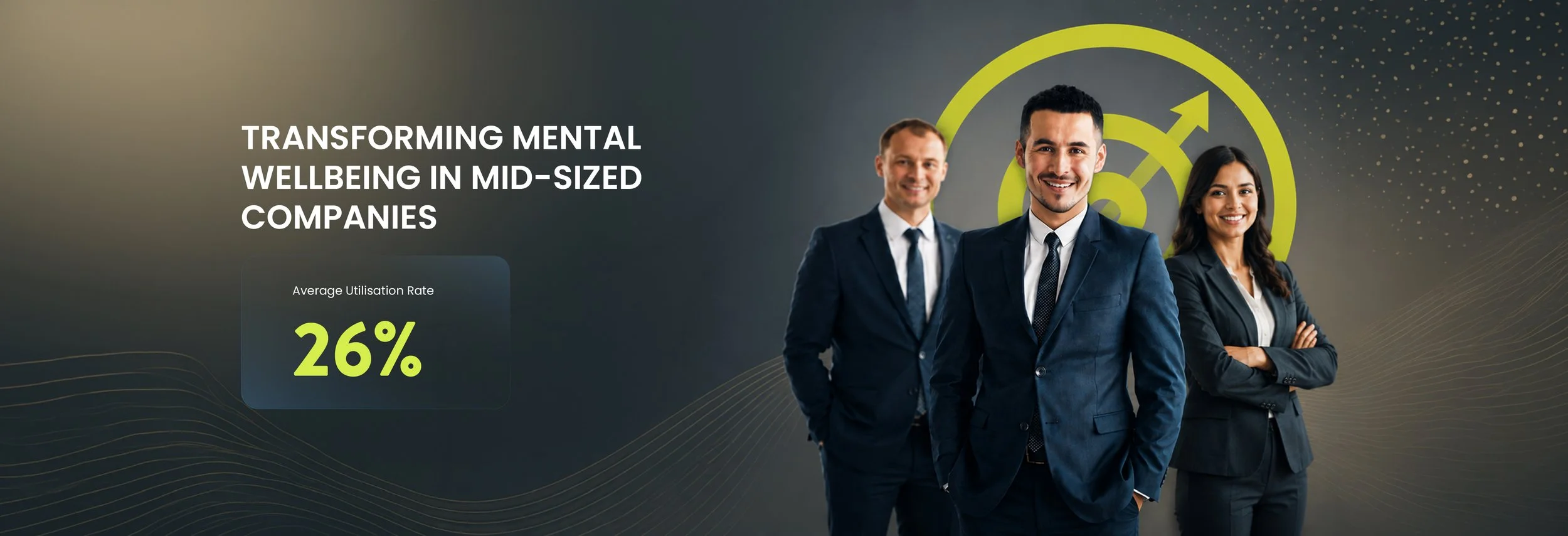
The Real Problem

Mid-sized companies often have the intent to support employee mental wellbeing, but the real challenge lies in adoption. Lean HR teams, limited bandwidth, close-knit cultures and privacy concerns can make employees hesitant to engage with available support.

The challenge was not just to provide counselling access. The challenge was to make employees feel safe enough to take the first step.

Key Challenges — Mid-size Companies

Resource Constraints

Small HR teams and tighter budgets leave little room to run wellbeing programs in-house

The result: wellbeing remains important, but often gets pushed behind urgent business priorities.
Higher Interdependence

In lean, interdependent teams, when one person is struggling, the whole group feels the weight

Stigma and Confidentiality

In a close-knit workplace, people worry that asking for help might not stay private

Diverse Needs Across One Workforce

A varied workforce needs flexible support across different life stages and backgrounds

The Turning Point

So, we changed the question.

Instead of asking employees to reach out, we made support worth reaching for approachable, relevant, and easy to access.

EAP Transformation Pointers
From
Low awareness
To
Stronger EAP visibility
From
Hesitation
To
Confident help-seeking
From
Generic wellbeing sessions
To
Relevant touchpoints
From
One-time communication
To
Sustained engagement

This helped move the EAP from being a passive benefit to an active support system employees could recognize, trust and use.

The Engagement Shift

Small touchpoints. Stronger trust.

This case study explores how Silver Oak Health helped mid-sized companies create steady engagement through a more practical and people-first EAP approach.

  • Making wellbeing easier to enter
    Employees were engaged through approachable wellbeing themes before deeper mental health conversations.

  • Reducing hesitation around support
    The experience was designed to feel private, safe and non-intimidating.

  • Fitting into real workdays
    Shorter, flexible formats helped teams participate without disrupting productivity.

  • Using insights to stay relevant
    Engagement patterns helped shape what employees needed next.


Download The Full Case Study